Compare two marathons side-by-side: course difficulty, elevation, typical race-day weather, finishers, BQs, and runner reviews—so you can choose the right race for your goals.
The Boston Marathon is a historic point-to-point road race that follows a net-downhill but challenging route through eight Massachusetts cities and towns. While the course features a total elevation drop of 459 feet, it is widely considered one of the most difficult major marathons due to its quad-punishing opening descents and a series of late-race climbs.
The race begins in Hopkinton and travels northeast toward the finish line on Boylston Street in Boston. The terrain is entirely paved asphalt, primarily following Route 135 and Route 16. The layout is relatively straight for the first 25 miles, with only one turn (at the Newton fire station) until the famous "Right on Hereford, Left on Boylston" sequence in the final half-mile.
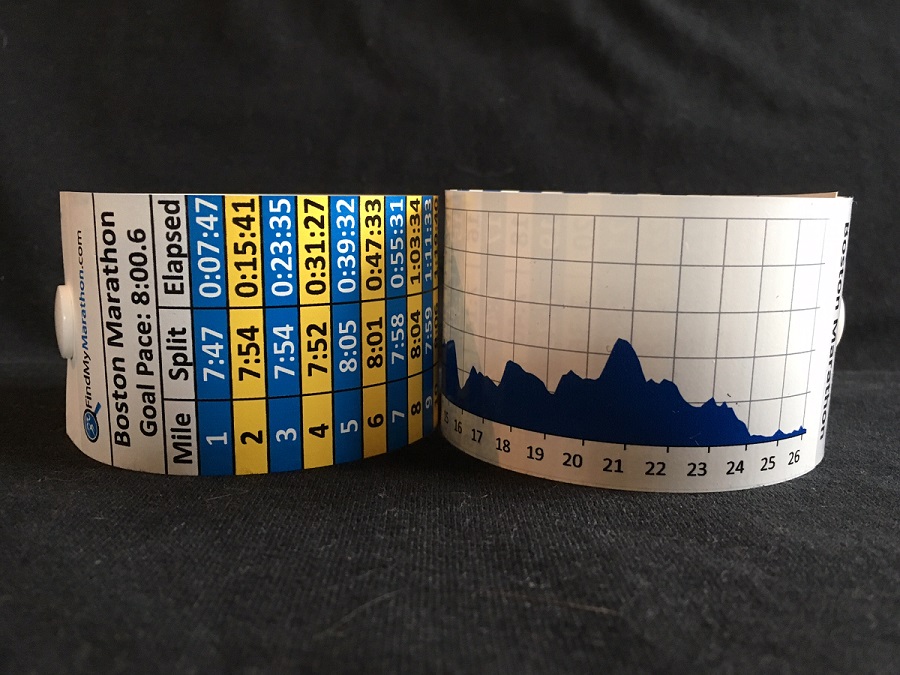
The elevation profile is characterized by extreme undulation, divided into three distinct phases:
Because of the net-downhill drop, the Boston Marathon is not eligible for World Records, and its PR potential is heavily dependent on the wind and weather. A strong tailwind from the west can lead to fast times, while a headwind off the Atlantic can make it significantly harder. PR attempts often fall apart in the Newton Hills if a runner does not conserve energy during the opening downhill miles. It is a course that best suits tactical runners who can manage their pace early to survive the late-stage climbs and the final descent into the city.
The TCS London Marathon is a world-renowned point-to-point road race known for its fast, record-breaking potential. Categorized as a flat and fast course, it is a premier Abbott World Marathon Major and a top destination for runners seeking a Boston Qualifier or a personal best. While the course is mostly flat, the route includes subtle elevation changes and technical turns.
The race follows a paved road course that begins in Greenwich and Blackheath, traveling west toward the finish line at The Mall. The terrain is entirely asphalt, providing a consistent surface. The course organization is unique in its early stages, featuring three separate start lines (Blue, Red, and Green) that converge around the three-mile mark. The route largely follows the path of the River Thames, crossing from the south to the north bank via the iconic Tower Bridge.
The elevation profile is predominantly flat, though it features a net downhill in the opening miles and specific technical sections in the second half.
The London Marathon offers elite-level PR (Personal Record) potential due to its lack of significant hills. However, the primary challenge is crowd density through most of the race and technical turns in the middle miles. PR attempts are most successful for runners who can remain disciplined during the early downhill miles and navigate the tight corners of Canary Wharf without losing momentum. It is a course that suits runners who thrive on high-energy crowd support and flat, predictable footing.
| Max Elevation: 470 feet (143m) | Elevation Gain: 815 feet (248m) |
| Min Elevation: 10 feet (3m) | Elevation Loss: 1275 feet (388m) |

| Max Elevation: 180 feet (54m) | Elevation Gain: 419 feet (127m) |
| Min Elevation: 6 feet (1m) | Elevation Loss: 531 feet (161m) |

 (4.8)