
Enter our Second Chance Contest for a chance to win a $25 Digital Visa Gift Card.
Everyone can enter — even if you submitted a prediction in the original contest.
ENTER THE SECOND CHANCE CONTESTEntries accepted until the B.A.A. announces the 2027 Boston Marathon qualifying cut-off time.

Compare two marathons side-by-side: course difficulty, elevation, typical race-day weather, finishers, BQs, and runner reviews—so you can choose the right race for your goals.
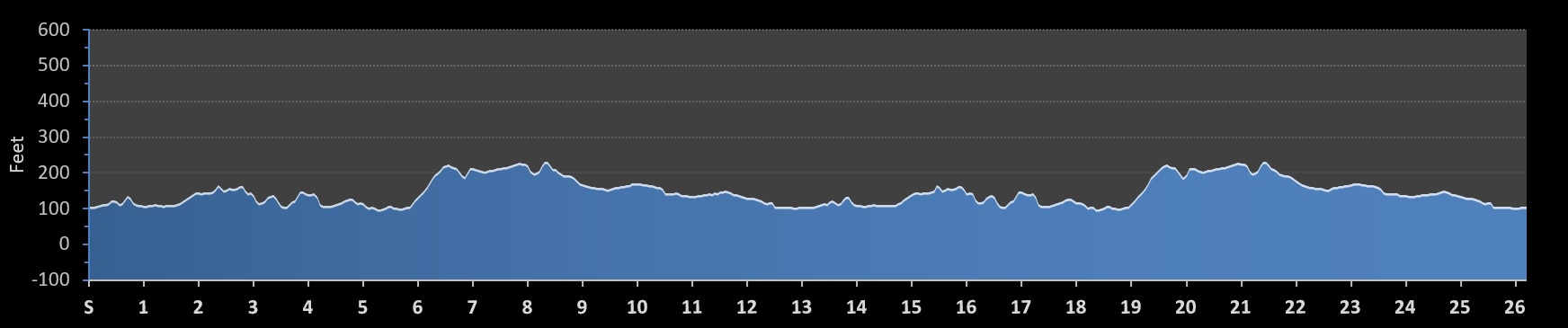
The Buffalo Marathon offers a fast, mostly flat road course that provides an expansive tour of Western New York’s largest city. As a USATF-certified, sanctioned route and an official Boston Marathon Qualifier, it is recognized for its minimal elevation changes, maintaining a total variance of only about 100 feet between its highest and lowest points.
The mostly loop course is run on paved city roads, asphalt parkways, and neighborhood streets. The race features a highly convenient, centralized staging area with a common start and finish line situated downtown less than 900 feet apart, right near the Buffalo Convention Center. From the downtown core at Delaware Avenue and Huron Street, the route tracks north through local historic neighborhoods, circles through regional parks, and routes back south toward the city waterfront before returning downtown to finish.
Notable landmarks along the course showcase the city's architectural and natural landmarks, including views of Lake Erie, Canalside, the KeyBank Center, and Forest Lawn Cemetery. Runners also navigate tree-lined corridors through the historic park and parkway system designed by Frederick Law Olmsted, passing architectural works by Frank Lloyd Wright. While the route includes minor rolling segments, it contains no major hills; however, the final stretch heading downtown around mile 25 is highly exposed and can introduce a difficult headwind depending on the wind direction. Crowd support is prominent in early neighborhoods and park sectors like Delaware Park, transitioning to quieter miles along the later stretches.
A smart pacing strategy centers on establishing an even, repeatable pace from the opening miles to capitalize on the mostly flat profile.
| Max Elevation: 232 feet (70m) | Elevation Gain: 855 feet (260m) |
| Min Elevation: 98 feet (29m) | Elevation Loss: 856 feet (260m) |
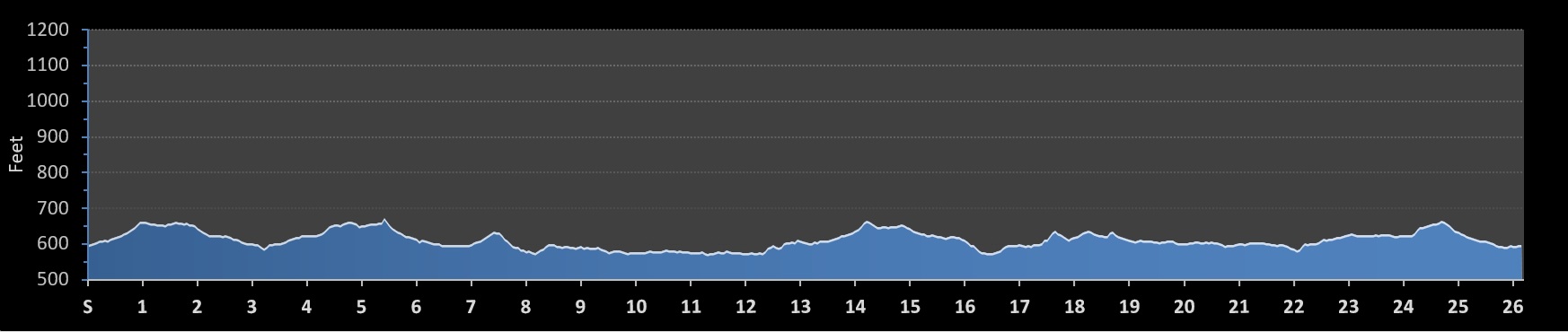
| Max Elevation: 672 feet (204m) | Elevation Gain: 585 feet (178m) |
| Min Elevation: 571 feet (174m) | Elevation Loss: 587 feet (178m) |
 (4.8)
(4.8)
 (4.2)
(4.2)